


 Posts
Posts



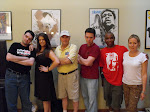

Producing an independent film is hard and nothing is harder or more important than the casting process. Although I’ve hired a casting agency and/or casting director for about 80% of my films, I’ve always casted all of my productions based on my own instinct and criteria despite listening to the advice of my casting director.
Having participated in the process of casting on several productions I’ve devised a list of elements that I look for in a potential actor for any of my productions. Although there are multiple elements that any actor can do to sway my favor in their direction, these are the five basic elements that I use to cast each of my individual actors. These elements are imperative to casting an independent film production but can be used to cast any type of film at any budget.
ELEMENT #1: “Check their resume and previous experience.”
One of the first things an actor will hand you (or your casting director) will be their head shot and resume, which will list all of the actor’s previous experience, training, and productions (be it film, theatre, professional, community, print, or commercial, etc.). This will help you decide if the actor has the training and prior experience to take on the role that they are auditioning for. It will also contain contact info for other production companies and agents so that you can contact references for the actor.
A thorough resume can be the deciding factor between two potential actors that are equally qualified in all other areas.
ELEMENT #2: “The cold reading verses the monologue.”
The audition is the number one way in which actors are cast not only in films but theatre, video, corporate, and commercial productions. There are two types of ways to audition – the cold reading (in which actors are given sides of scenes from the production on the day of the audition with little or no time to prepare) and the monologue (which is a prepared scene reading from the actor’s own choice of material). More often than not actors will be given sides for a cold reading but I prefer to see and hear an actor perform their own monologue. Cold readings have their benefits. From a cold reading I can tell if an actor can take direction from a director, whether they will be able to incorporate changes in the script on the day of filming, and will they be able to improv at a moment’s notice, among other things.
From a prepared monologue I can tell whether or not the actor will come prepared to set with lines memorized, whether or not they will bring passion to the role, and whether or not they will be an actor who uses their body and movement to help tell a compelling story, among other things. These are the criteria I look for in an actor while casting a film.
For my feature House of Secrets (produced by BLH Films) I cast one of my leads – Chris Whitley (Paperboys) based on his monologue. He gave a great cold reading but so did three other actors but it was his monologue (which the others did not have) that broke the three way tie. In fact, I ended up calling him that evening and telling him the part was his.
ELEMENT #3: “An actor must be able to improve.”
Because the screenplay is only seen and viewed as a “blueprint” for the final film product, actors must be able to incorporate changes while on location filming and sometimes even in the post-production process. Being trained in the art of improvisation is not something to take lightly. It is one of the many skills that an actor uses to not only help them find and create their character but to also interact and react to other actors. It is used to perfection in sketch comedy (i.e. Monty Python and Saturday Night Live) but is also an invaluable tool when changes are made to the screenplay on set during filming. Actors who posses this skill are more likely to be able to incorporate these types of changes without too many problems.
Director Ron McLellen (Jack O’Lantern) is very prone to script changes when on set and is someone who uses improv all the time to make scenes “pop” off the page. On the set of his Evil in the Flesh, McLellen was forced to improv much of the climax of the film when the lead actress injured herself (thankfully, not while filming or on set) and was unable to do many of the stunts originally required of her. The focus of the end of the film shifted from the lead actress to another actor and all the actors had to have the ability to improv the new changes to the film. Luckily, the two actors whom the changes affected the most had training in improv and/or performed with an improv troop. Because the director knew he might improv during filming these actors were given a leg up when we cast them and it ended up working for the production in the end.
ELEMENT #4: “Be aware of scheduling conflicts.”
One of the biggest problems I’ve encountered on an independent film production is the conflicts that are faced with the production schedule in terms of actors’ availability. Many of the films I’ve worked on have had their production schedule stretched two, three, or five weeks due to actor unavailability (I’ve even been on some where filming stretched more than a year). It is imperative that the shooting/production schedule be set prior to auditions and that all potential cast members are well aware of when filming will be. The last thing any producer wants to do is retrofit a new shooting schedule due to the conflicts of multiple cast members. Many future problems can be avoided if this is first addressed at the start of the production.
Production on the indie feature Out of Season (of which I star in and do cinematography) had to be postponed for six months due to the lead actress’ schedule. We were several days into filming when he encountered actor conflicts with the schedule. Principal photography was halted but ultimately when production began again the actress was replaced and everything that had already been filmed had to be scrapped. This is one situation that could have been avoided if production had gotten the actress’ conflicts prior to filming.
ELEMENT #5: “The actor should have enthusiasm.”
This is the hardest criteria to judge because most actors when auditioning for a role do not have the luxury of having read the entire screenplay prior to the audition. On most occasions the actor has only read the synopsis of the screenplay and/or a few sides of the screenplay, in addition to possibly a character breakdown of the role(s) they are auditioning for.
You won’t know from an audition whether or not an actor will love your screenplay or character, but what you will know is whether or not an actor is enthusiastic about their craft and the possibility of getting a role in your film. If you can find an actor who is enthusiastic just from reading a synopsis and sides of your screenplay then that’s half the battle.
In reference to House of Secrets, again, actor Whitley (who performed the monologue) was so enthusiastic during both his cold reading and the monologue that I immediately took notice. He was an actor that I was not familiar with prior to his casting and he had twice more energy than any of the other actors that came in to read. The same can be said for actress Alicia Schulz (another actor I was not familiar with prior to casting) who exhibited so much more enthusiasm than any of the other actors that came in that she was immediately put at the top of my list (and who eventually was rewarded with the role).
There are a lot of criteria that must be taken into consideration when casting for a film and none of it should be taken lightly because the people you cast will be with you throughout production of the film (and if you’re lucky on subsequent films as well), so, remember to never take the casting process lightly and always consider the suggestions and recommendations of not only the casting directors and agencies as well as producers, writers, directors, and all other important personnel in order to craft a final product that everyone involved can be proud of.
Saturday, April 17, 2010

Five “DON’TS” To Independent Filmmaking
As a production manager, producer, and a director of several independent films from various production companies, I’ve become aware of both things you should and should not do while on the set of an indie film. Although the info I will go over in this article is in relation to my experience on these low budget productions, they can nevertheless be used on film productions of any budgetary range. What is important is that whether you are a production manager, a producer, or a director, these are five “don’ts” that should be avoided in order to give your cast & crew a memorable and worthwhile experience on your production (in the hopes that they’ll all return to help you on subsequent productions).
“DON’T” #1: “Be on time.”
As a person in charge of an independent film production you should always make it a priority to be on time. This does not mean being on location at the Call time of 8:00a.m. As a person in charge of a film production you should be on location thirty minutes, if not more, prior to the rest of the cast & crew. This is not only to pre-set anything that needs to be pre-set but this is also to fix any on location problems or being available for cast & crew members whom may get lost. It is very common that when filming on a practical location to run into problems with store owners (or the personnel running the store that day) to have forgotten or have no knowledge of you and your crew having access to a location on a particular day. On the set of the Unique Production Between Love & A Hard Place, when we arrived at one of these such locations, the store owner was unaware or had forgotten we were suppose to film that day (even though it had been in the production schedule for weeks). Luckily, none of the cast was at the location and we were able to change locations at the last moment to accommodate the change. It was an easy transition to change locations at the last moment and very little time was lost at this location due to the abrupt change.
“DON’T” #2: “Don’t belittle your cast & crew.”
It is not uncommon for indie film productions to be populated by cast & crew whom are getting paid very little or may even be on deferred payment (or even working for free). It is very important to remember that many members of your cast & crew may be working on your film because that either want the experience, believe in the project, or need the screen credit, therefore don’t take advantage of their generosity. Respect your cast & crew whether they are a production assistant (PA), an extra, a camera operator, or a grip, etc. because film is a collaborative medium and it takes a community to build a complete house not an individual. On the Cake Baby Production short film The Tedious Existence of Terrell B. Howell, I was working in assistant catering capacity (instead of as a production manager or producer) but the producers afforded me the same respect as they did the cinematographer or any of the main actors. Since I was working on the production because of the writer and the director, I felt like any other crew member despite being in a crew position I was not familiar to. I felt just like any one of the other crew members.
“DON’T” #3: “Don’t forget to praise your cast & crew.”
Because film making is such a collaborative medium it is extremely important to remember that it takes many creative and technical people to put a film together and despite what naysayers may say, no one person’s job is more important than anyone else’s. Although this can be overlooked on a low budget film, everyone, whether they be a boom operator, a best boy, an extra, a supporting actor, the script supervisor, or a dolly grip, should be treated the same and praise should be doled out equally. As I will reiterate time and time again – many cast & crew members participate in an indie production for the love of it despite the low or no pay (or deferred), so, praise should be handed out to everyone and not just a few select individuals.
I try not only to do this at the end of each day but at the end of the production as well (this can be done at a cast & crew party as well as at the screening for the production personnel). It is very common, for me, to send out a mass email to the entire cast & crew of any production I work on a “Letter of Thanks” so that they know how much I appreciate working with them. This has not only helped me get onto subsequent film productions but has also helped me maintain and cultivate these relationships for my own production as well.
“DON’T” #4: “Don’t forget to feed your cast & crew.”
I have been on over fifty short films, commercials, and features of all budgetary constraints and I’m sorry to say that some of them have not provided and catering. It is my opinion that a well fed cast & crew is a happy cast & crew and therefore, I try to provide snacks and food and meals on all my film productions. Shooting days can sometimes stretch as long as fifteen or more hours and it is important that you have snacks and drinks on set at all times to not only prevent dehydration but to also provide cast & crew enough sugar and energy to get through the long day(s). Drinks should not only include both water and coffee but drinks with caffeine and juices but even energy or re-hydration sports drinks. Snacks should include fruits and vegetables in addition to snacks with sugar. On my film sets I usually provide fruit and cheese plates in addition to a variety of drinks and snack size candy and chips. This usually provides cast & crew with a wide variety of choices. I also remember at the beginning of film production to ask cast & crew to give me a list of suggestions for snacks.
Lunch should be provided as well but if it is not than an “off the clock” meal (of about 1 to 1 ½ hours) is also a very good idea.
“DON’T” #5: “Don’t forget to have fun!”
The #1 Rule of Indie Filmmaking is to never forget to have fun! If the people in charge of the production are not visibly having fun than neither is anyone else. Contrary to what you may believe, the cast & crew knows when the individuals who are in charge are on set and not enjoying the experience it can be seen and felt by other cast & crew members. This can bring down the moral on set (which every filmmaker tries to avoid).
These are only a few of the handful of “Don’ts” that should be remembered by production managers, producers, and directors, among others, because it will promote a healthy and productive film shoot from beginning to end.
“DON’T” #1: “Be on time.”
As a person in charge of an independent film production you should always make it a priority to be on time. This does not mean being on location at the Call time of 8:00a.m. As a person in charge of a film production you should be on location thirty minutes, if not more, prior to the rest of the cast & crew. This is not only to pre-set anything that needs to be pre-set but this is also to fix any on location problems or being available for cast & crew members whom may get lost. It is very common that when filming on a practical location to run into problems with store owners (or the personnel running the store that day) to have forgotten or have no knowledge of you and your crew having access to a location on a particular day. On the set of the Unique Production Between Love & A Hard Place, when we arrived at one of these such locations, the store owner was unaware or had forgotten we were suppose to film that day (even though it had been in the production schedule for weeks). Luckily, none of the cast was at the location and we were able to change locations at the last moment to accommodate the change. It was an easy transition to change locations at the last moment and very little time was lost at this location due to the abrupt change.
“DON’T” #2: “Don’t belittle your cast & crew.”
It is not uncommon for indie film productions to be populated by cast & crew whom are getting paid very little or may even be on deferred payment (or even working for free). It is very important to remember that many members of your cast & crew may be working on your film because that either want the experience, believe in the project, or need the screen credit, therefore don’t take advantage of their generosity. Respect your cast & crew whether they are a production assistant (PA), an extra, a camera operator, or a grip, etc. because film is a collaborative medium and it takes a community to build a complete house not an individual. On the Cake Baby Production short film The Tedious Existence of Terrell B. Howell, I was working in assistant catering capacity (instead of as a production manager or producer) but the producers afforded me the same respect as they did the cinematographer or any of the main actors. Since I was working on the production because of the writer and the director, I felt like any other crew member despite being in a crew position I was not familiar to. I felt just like any one of the other crew members.
“DON’T” #3: “Don’t forget to praise your cast & crew.”
Because film making is such a collaborative medium it is extremely important to remember that it takes many creative and technical people to put a film together and despite what naysayers may say, no one person’s job is more important than anyone else’s. Although this can be overlooked on a low budget film, everyone, whether they be a boom operator, a best boy, an extra, a supporting actor, the script supervisor, or a dolly grip, should be treated the same and praise should be doled out equally. As I will reiterate time and time again – many cast & crew members participate in an indie production for the love of it despite the low or no pay (or deferred), so, praise should be handed out to everyone and not just a few select individuals.
I try not only to do this at the end of each day but at the end of the production as well (this can be done at a cast & crew party as well as at the screening for the production personnel). It is very common, for me, to send out a mass email to the entire cast & crew of any production I work on a “Letter of Thanks” so that they know how much I appreciate working with them. This has not only helped me get onto subsequent film productions but has also helped me maintain and cultivate these relationships for my own production as well.
“DON’T” #4: “Don’t forget to feed your cast & crew.”
I have been on over fifty short films, commercials, and features of all budgetary constraints and I’m sorry to say that some of them have not provided and catering. It is my opinion that a well fed cast & crew is a happy cast & crew and therefore, I try to provide snacks and food and meals on all my film productions. Shooting days can sometimes stretch as long as fifteen or more hours and it is important that you have snacks and drinks on set at all times to not only prevent dehydration but to also provide cast & crew enough sugar and energy to get through the long day(s). Drinks should not only include both water and coffee but drinks with caffeine and juices but even energy or re-hydration sports drinks. Snacks should include fruits and vegetables in addition to snacks with sugar. On my film sets I usually provide fruit and cheese plates in addition to a variety of drinks and snack size candy and chips. This usually provides cast & crew with a wide variety of choices. I also remember at the beginning of film production to ask cast & crew to give me a list of suggestions for snacks.
Lunch should be provided as well but if it is not than an “off the clock” meal (of about 1 to 1 ½ hours) is also a very good idea.
“DON’T” #5: “Don’t forget to have fun!”
The #1 Rule of Indie Filmmaking is to never forget to have fun! If the people in charge of the production are not visibly having fun than neither is anyone else. Contrary to what you may believe, the cast & crew knows when the individuals who are in charge are on set and not enjoying the experience it can be seen and felt by other cast & crew members. This can bring down the moral on set (which every filmmaker tries to avoid).
These are only a few of the handful of “Don’ts” that should be remembered by production managers, producers, and directors, among others, because it will promote a healthy and productive film shoot from beginning to end.
Friday, February 5, 2010
PLAYING A ROLE IN INDEPENDENT FILM PRODUCTION: ON THE SET OF THE SHORT FILM NO EXPERIENCE NECESSARY
PART 1: “STILL PHOTOGRAPHY”
The following series of articles document my experience on the Blank Stage Studios production of the short film NO EXPERIENCE NECESSARY, which was written & directed by Brent Brooks. These series of articles will go into detail on the different aspects of production in which I participated. As such this first article I will touch upon still photography and how I contributed to the film.
A little background on the short film NO EXPERIENCE NECEASSARY. Brent Brooks (whose previous film was the art house feature ART OF SUICIDE) developed the screenplay through the screenwriting group The Blank Page and decided to make this his first post-ART OF SUICIDE production (and the third film from the writer’s group to go before the camera). The plot is fairly simple as it depicts a serial killer who uses the deception of a casting call for a movie to lure his next prey. Nothing new in terms of writing but Brooks wanted to production a high production value production in which to use as a potential calling card for future work. This could be such a production.
I came on board as production manager (which I will discuss in a future article) because much of my experience in film production stems in this area. Although I did not intend to do any still photography on the film (since Brooks had already hired a photographer to do just this thing), I have the habit of doing this on my own accord mainly for my own archival purposes. I’ve learned through the years that many indie productions still do not see the benefit of having good production stills taken on set. I do this not only for myself but for all the other cast & crew as well. I freely give the pictures away and post most of them online so that everyone has access to them. This allows everyone to have a record of the production.
On the set of NO EXPERIENCE NECESSARY I took approximately 3,000 pictures over the course of 4 days. This is actually not as many as you might think considering that only about 500 of them are usable which includes both production stills of scenes in the film and behind the scenes pictures. The actually photographer on set didn’t take nearly as many as I did. There are several reasons for this the chief being that because I can put my camera on “silent mode” I can use it while we were filming whereas he could not. This allowed me to get numerous photos from all different angles. I was able to get the photos he could not.
This means that I got a lot of scene accurate photos which is good for the film in terms of representing actual scenes. I also paid a lot of attention in terms of getting a lot of behind the scenes pictures with cast and crew, not only in actual scene set up shots but also in group shots and in the obligatory “fun” shots.
The sheer amount of pictures that I took on the set of the film would not go unnoticed as when I started to post them online both cast & crew were finally able to see everything that happened in front of the camera as well as behind it.
Sometimes the importance of still photography is not recognized until it is too late to do anything about it. Indie films use still photography not only to craft and create movie posters but also to help with production stills for the film and marketing as well. A lot of the advertisement and marketing for an indie film can be seen online and nothing can sell a film to an audience better than a photo (unless of course you have a trailer already crafted).
Although I’ve got about 500 photos that represent the film, it was to Brooks’ idea to slowly reveal them to both the cast & crew and the public in order to help promote the film through production and into the film’s future which I now believe was only one of the most ingenious ideas he’s had to market and promote the film and in really that’s exactly what still photography is intended to do.
TO BE CONTINUED.
The following series of articles document my experience on the Blank Stage Studios production of the short film NO EXPERIENCE NECESSARY, which was written & directed by Brent Brooks. These series of articles will go into detail on the different aspects of production in which I participated. As such this first article I will touch upon still photography and how I contributed to the film.
A little background on the short film NO EXPERIENCE NECEASSARY. Brent Brooks (whose previous film was the art house feature ART OF SUICIDE) developed the screenplay through the screenwriting group The Blank Page and decided to make this his first post-ART OF SUICIDE production (and the third film from the writer’s group to go before the camera). The plot is fairly simple as it depicts a serial killer who uses the deception of a casting call for a movie to lure his next prey. Nothing new in terms of writing but Brooks wanted to production a high production value production in which to use as a potential calling card for future work. This could be such a production.
I came on board as production manager (which I will discuss in a future article) because much of my experience in film production stems in this area. Although I did not intend to do any still photography on the film (since Brooks had already hired a photographer to do just this thing), I have the habit of doing this on my own accord mainly for my own archival purposes. I’ve learned through the years that many indie productions still do not see the benefit of having good production stills taken on set. I do this not only for myself but for all the other cast & crew as well. I freely give the pictures away and post most of them online so that everyone has access to them. This allows everyone to have a record of the production.
On the set of NO EXPERIENCE NECESSARY I took approximately 3,000 pictures over the course of 4 days. This is actually not as many as you might think considering that only about 500 of them are usable which includes both production stills of scenes in the film and behind the scenes pictures. The actually photographer on set didn’t take nearly as many as I did. There are several reasons for this the chief being that because I can put my camera on “silent mode” I can use it while we were filming whereas he could not. This allowed me to get numerous photos from all different angles. I was able to get the photos he could not.
This means that I got a lot of scene accurate photos which is good for the film in terms of representing actual scenes. I also paid a lot of attention in terms of getting a lot of behind the scenes pictures with cast and crew, not only in actual scene set up shots but also in group shots and in the obligatory “fun” shots.
The sheer amount of pictures that I took on the set of the film would not go unnoticed as when I started to post them online both cast & crew were finally able to see everything that happened in front of the camera as well as behind it.
Sometimes the importance of still photography is not recognized until it is too late to do anything about it. Indie films use still photography not only to craft and create movie posters but also to help with production stills for the film and marketing as well. A lot of the advertisement and marketing for an indie film can be seen online and nothing can sell a film to an audience better than a photo (unless of course you have a trailer already crafted).
Although I’ve got about 500 photos that represent the film, it was to Brooks’ idea to slowly reveal them to both the cast & crew and the public in order to help promote the film through production and into the film’s future which I now believe was only one of the most ingenious ideas he’s had to market and promote the film and in really that’s exactly what still photography is intended to do.
TO BE CONTINUED.
Friday, January 8, 2010
FRIDAY THE 13TH Fan-Film A Go!
After the success of the fan film HALLOWEEN: RETURN OF THE SANDMAN, director Ron McLellen and Southlan-Films are gearing up to take on Jason Voorhees in an all new fan film based on the FRIDAY THE 13TH franchise. Over the last week McLellen and company have been filming parts of a teaser trailer that are currently on You Tube at - http://www.youtube.com/watch?v=HX3Nh2Hd98Y
I am working on the film as production manager but I will also have a larger role in the film as an actor than my character in the previous film. It should be a blast and I'll keep you informed about the film as details are made available.
I am working on the film as production manager but I will also have a larger role in the film as an actor than my character in the previous film. It should be a blast and I'll keep you informed about the film as details are made available.
Thursday, January 7, 2010
Filming on BETWEEN LOVE & A HARD PLACE Comes To an End :(
As we all know, all good things come to an end and as such principal photography on the Unique Production BETWEEN LOVE AND A HARD PLACE. After 16 days of on location filming the indie production which was written by Regina Wells (based on her original stage play) closes its production offices as it enters the third and fourth phase of production which is post-production and marketing, respectfully. As production manager on the film I have very little else to do on the film now that the physical process is over.
Produced by Unique Be’Ans and co-directed by Wells and Brent Brooks (of Blank Stage Productions) BETWEEN LOVE AND A HARD PLACE was a tough production shoot but between the two directors they put together an amazing team of talented technicians and personnel that far exceeded my expectations. Despite the rushed shooting schedule and the long hours we were able to complete the film in the allotted schedule and come out with our sanity intact (which is the best thing that could have happened).
This being the first faith-based film I’ve ever worked on there were many challenges that I had to face as a filmmaker and story teller. The same can be same of any other type of film but with faith-based films, just like dramas on very sensitive material, a different aesthetic has to be applied than that of other genres (say comedies, horror, or action films). This is a drama with familial themes that warrants a more sensible eye tone. This is not a bad thing as there was much fun and hilarity had on the set between both cast and crew and since we were on location the cast and crew were able to bond in a way that surpasses simply being on set as “work horses.” One of the best things about this production was the fact everyone knew they were working on an independent film and each person did what they had to do to accomplish the end game which is to have a finished film that everyone can be proud of and this is what every young (and seasoned) filmmaker wants.
Filmmaking is a long process that takes many people (from many different walks of life and experience) from beginning to end and it’s always a miracle when one finishes principal photography (I’ve been on several that stopped in mid production and never even finished filming), so, it was with great satisfaction that I was happy to be on set on January 3, 2010 when BETWEEN LOVE shot its final “martini” shot. It was a monumental occasion for not only the cast and crew but for Wells and Brooks who completed their first (of hopefully many) collaborations. It was also the night that the crew was able to take their official crew picture for the film (which many times on indie films it never gets done).
We must all take a moment to congratulate director Regina Wells for writing the screenplay and opening her story up to the more judgmental medium of film. Unlike the theatre and stage arts (which can be re-imagined and re-interpreted with each subsequent production), film is a once in a lifetime opportunity for any story. It is a rare occasion when a film is remade, so, we hope we all got it right the first time. We must also bow our heads down to the remarkable cast that was assembled for the film – Bern Nadette Stanis, Irone Singleton, Canton Jones, Kaira Akita, and Nina Nicole, among many others, that dedicated their time and talent to the production. Although we worked with several seasoned professionals, this production gave many local actors the opportunity to star in the film (many of which starred in the original stage production). Another huge contribution to the production is the excellent technical crew assembled by Brent Brooks (and even more crew from Wells) many of which have worked before on other productions. The production crew was professional and exceeded expectations and managed to work as a cohesive whole to make the film look the best that it could be. Chief among the crew were Randy Stewart (director of photography) and Byron Erwin (art director and editor), among many others.
We should also thank the Executive Producers of the film who believed and had faith in Wells’ vision enough to put up the funds to produce the film. Without these people there may never have been a film and many of us would have never had the opportunity to come together and meet and work together.
Working on BETWEEN LOVE has been an extraordinary experience not only for me but other members of the production as well. It was one that as hard as it was at the beginning it was well worth the hard work because it reminded me that all hard journeys end in great achievement. Where would we be without the great accomplishments of Christopher Columbus, Martin Luther King, Jr., Geronimo, Queen Elizabeth, Joan of Arc, and most importantly Jesus of Nazareth? There is no great benefit if there is no great hardship and there is no greater hardship than filmmaking.
As we each go into our next endeavor, whether it be filmmaking or something else, let us take a few moments to bow our heads and give thanks for the work we’ve done and the work we’re bond to do.
EPISODE 1007 Is Now On Line!
The newest episode to the on line series is finally up on Vimeo! This episode spotlights an interview with actress Paige Ireland whom I first worked with on the Southlan-films production CREATURES OF THE NIGHT and then subsequently hired as the lead for MISS KITTY & ME and its companion THE OLD WOMAN & THE PARK.DIARY OF A FILMMAKER - (EPISODE 1007)
Tuesday, November 10, 2009
HALLOWEEN Phan-Film A Sucess!

Last Halloween's Premiere of the Southlan-Film's phan-film HALLOWEEN: RETURN OF THE SANDMAN was a tremendous success. It first had a premiere screening on October 20th at the Gwinnett Center where it was greeted with an enthusiastic audience before having it's World Premiere online at You Tube http://www.youtube.com/watch?v=JF5GH1Q3F9s in which it was separated into 7 parts (or 73 minutes). The featurette has gotten great reviews from fans which is whom the film was made for.
Writer/producer/director Ron McLellen was at had at the Gwinnett screening (as was most of the cast & crew of the film) to support the film and to see it on the big screen with an audience. Although McLellen plans to do more phan-films in the future only time will tell if he does a sequel to this one.
Subscribe to:
Posts (Atom)